


Authority in Google: how to build it for better SEO
Authority in Google comes from covering your topic in depth, being mentioned in the right places and having a brand people search for. Here is how.

Authority in Google is how reliable and credible Google judges your website, your company and the people behind your content to be on a given subject. It is not a number you can buy. It is built over time through branded searches, mentions and content that covers your subject in depth. A strong link profile with no real brand behind it is a weak foundation. Here is how authority, E-E-A-T and SEO fit together in practice.
What is authority in SEO?
Authority in SEO is about how reliable and credible you, your company and your website are seen to be, by users and by search engines.
A website with high authority is regarded as a safe source of valuable, relevant information in its field.
This is closely linked to Google’s concept of E-E-A-T. One important point: Google says E-E-A-T itself is not a specific ranking factor. It is a framework for what Google’s systems try to recognise in a credible source, not a lever Google turns up or down. So you are not optimising towards a number. You are building the signals underneath it.
Authority also takes time to build. Google treats you as an entity in its Knowledge Graph, and the connection between your brand and your subject grows stronger only as you keep appearing in the right context. Publishing large amounts of content is not enough on its own. In an Ahrefs study published in 2025, only 1.74 per cent of one million random new URLs reached the top 10 within a year. Patience and consistency are part of the job.
Why authority carries more and more weight
Ahrefs found that 74.2 per cent of 900,000 new English-language web pages detected in April 2025 contained AI-generated content. When that much text is machine-assisted, the source, meaning who is behind the content, matters more than the text itself. Text is cheap to produce. A brand that people search for and trust is hard to build.
I have worked in search for 14 years. Throughout that time, Google has fought spam. There was a period when SEO specialists only shared tactics behind closed doors so that Google could not counter them. Today we talk much more openly about what works and what does not. Partly that is self-promotion, but it is also because many of the techniques are natural and in line with what Google wants to see.
A website with lots of external links but no brand or presence in its market looks unnatural.
How do you improve your brand’s authority with Google?
You improve your authority by building the signals Google uses to judge credibility: good content, mentions on real websites, branded searches and sound technical housekeeping. Here is the list to work through:
- Create high-quality content: Invest in content that shows your expertise and gives real value. Google can see how users respond and compares you with the alternatives, so a fully AI-generated text only works if it is better than your competitors’ content.
- Update older posts: Keep your articles up to date as things change.
- The quality of external links: Both the number and the quality of links to your website matter. Brands with high authority often have a more varied and credible link profile.
- Use PR and influencers: Work with influencers or use PR to get your brand mentioned in respected publications.
- Engagement: Readers who spend time on the page and go on to explore the site are a sign that they find your content valuable. Google can see which results users engage with (read more about user signals as a ranking factor and about the 2024 Google leak).
- Mentions: Regular mentions on real websites signal authority.
- Branded searches: How often people search specifically for your brand shows that you are an established company.
- Social media: Build your brand’s presence on social media.
- User experience measures: Mobile-friendliness, page speed and a secure connection (HTTPS) are increasingly seen as indicators of a brand’s credibility and authority.
- Reviews: Encourage satisfied customers to leave reviews.
Note that brand awareness and authority are related but not directly linked. A company with high brand awareness tends to have high authority. Go through the list above and improve the areas you are missing today.
A word of caution on PR and guest posts
PR and mentions are still valuable, but be careful about chasing authority by publishing content on strong media websites (so-called parasite SEO). Google’s site reputation abuse policy targets exactly this. For searches made in the UK, a manual action under that policy still directly affects how the content ranks. Since 30 August 2026, the effect is different for users inside the European Economic Area, which the UK is not part of: there the manual action itself no longer applies, but the affected section of the site may be separated in Google’s systems so that, over time, it ranks independently of the rest of the site.
In short: an article about you that sits within a credible editorial operation, with a clear author and the same quality as the rest of the site, is worth something. A discount-code section or a loose guest post on someone else’s domain cannot be relied on to borrow that domain’s authority. Put your budget into a genuine presence in your market rather than bought link packages.
Topical authority: cover the whole topic, not just the keyword
Topical authority is how completely and coherently your website covers a subject area, and it is often what decides whether you rank, rather than the number of links. Google wants to see that you answer every question a user might have about a main topic, not just the single keyword.
Picture a hub page that gives the overall picture, surrounded by supporting pages that each go deep on one aspect. The hub links out to the supporting pages, and they link back to the hub and to each other where there is a logical connection. When the whole network covers the topic without gaps, Google reads you as an authority on the whole cluster.
A concrete example: which company does Google trust more?
- Company 1: A single page about “running shoes” with products and buy buttons.
- Company 2: A hub page about running shoes plus in-depth pages on running styles, shoe sizing, common injuries and shoe care, all linked internally with descriptive anchor text.
All else being equal, it is company 2 that builds topical authority, because it covers the whole topic and answers the full search intent. For me, the choice is obvious.
Covering a topic in depth goes hand in hand with more keywords starting to rank, often without any change to the link profile. The point for you: a handful of links is not enough if your content has gaps. Cover the topic thoroughly and you pick up more keywords along the way, and your links have less work to do.
Who should prioritise improving authority?
Not every company needs the same SEO strategy. If your authority is low, for example, it will be hard to win on highly competitive keywords. Authority can also come naturally, and it is not always the first priority.
Established and new brands
- Established brands: Can usually start ranking for harder keywords straight away. Whether what you have is enough depends on how your authority compares with your competitors’.
- New brands: Need to establish expertise and prove they are experts before they can rank. You can usually mix in some traditional SEO, but do not expect top positions straight away.
Analyse the competition in your niche
Two companies in different niches will not need exactly the same SEO work. When we take on a new client, we always start with an SEO audit to judge which actions will have the greatest effect.
Our advice is to look at the competitors that rank above you. Which external websites do they appear on? How do they establish themselves as experts? Match your competitors and find a gap they have missed.
Where authority in SEO is heading
As it becomes ever easier to produce text, images and media with AI, we believe who publishes the content will become an ever more important part of your rankings.
If a person or company generally delivers high quality and other people like the content, it deserves to rank higher.
One industry conclusion we lean on, though nobody can state it as fact, is that unlinked brand mentions now appear to be more closely associated with visibility in AI answers and AI Overviews than traditional backlinks are. Our hypothesis is that the same authority that helps you in ordinary search results also influences whether AI tools choose to cite you. If that holds, being mentioned in the right context becomes even more important, not just being linked to.
You can produce content however you like, as long as it ends up better than your competitors’.
Google’s patents: a clue
SEO practitioners often point to Google patents that discuss co-occurrence: how often a brand and related terms appear together across the web. A patent shows what Google has explored, not necessarily what it uses, but the idea is consistent with how Google describes itself.
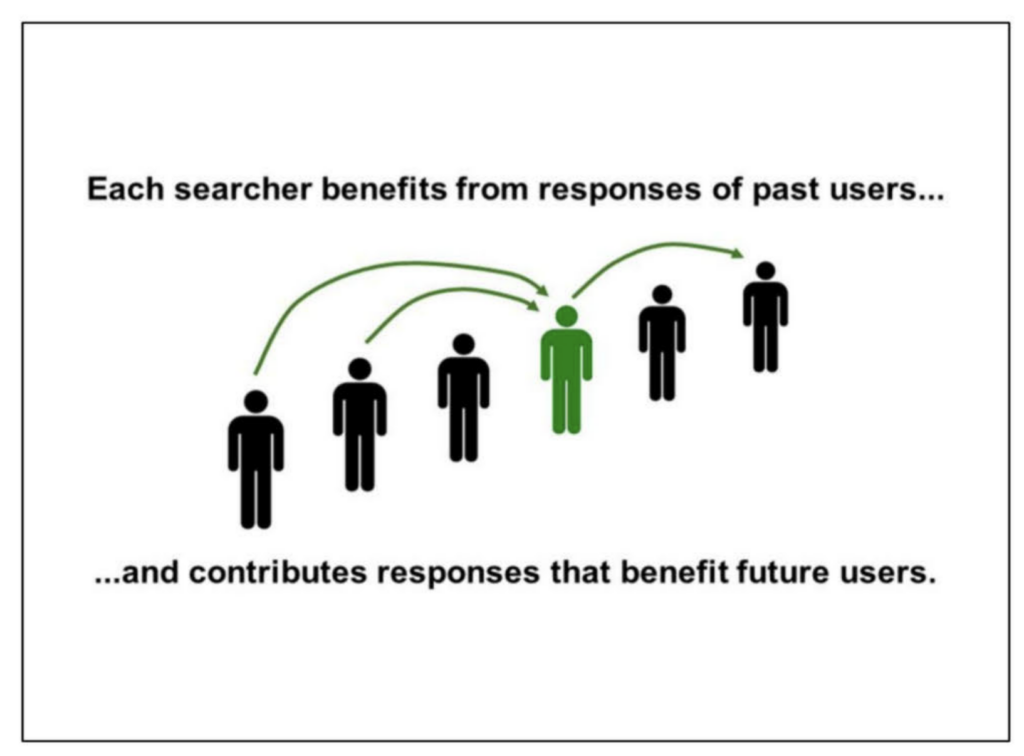
Google treats the internet as a database of entities: concrete things, people and companies. Authority grows when your brand is consistently mentioned in the same context as your industry’s central concepts. If your name keeps appearing in passages about your subject, on independent websites, an association forms between your entity and that subject.
If your brand often appears in contexts linked to your keywords, that signals relevance and authority, which can improve your rankings for those keywords. In practice, that association can earn you positions even where there are no direct anchor-text links. Simple enough in principle.
Final thoughts
SEO is not a channel that can be run in complete isolation from the rest of your digital marketing.
Good SEO takes the buyer’s journey and their experience of the website into account. So good SEO raises not only your traffic but also your conversion rate.
If your company is new, Google will usually wait for positive user signals and outside validation before you rank properly. Read more about the Google sandbox.
Frequently asked questions about authority in Google
What does authority in Google mean?
Authority in Google is how reliable and credible Google judges your website and brand to be on a given subject. It rests on signals such as branded searches, mentions, content quality and how thoroughly you cover your subject area.
Is authority a Google ranking factor?
Not as a single factor. Google says E-E-A-T itself is not a specific ranking factor, and authority works the same way: you build the underlying signals, not one number.
Can you buy authority through third-party metrics such as DA or DR?
No. Domain Authority (Moz) and Domain Rating (Ahrefs) are estimates that SEO tool vendors calculate from their own link data. They are not Google metrics, and pushing them up does not buy you standing with Google. Authority with Google is built subject by subject, through the signals described above.
How long does it take to build authority?
It takes time. The connection between your brand and your subject strengthens only as you keep appearing in the right context, and in an Ahrefs study published in 2025, only 1.74 per cent of one million random new URLs reached the top 10 within a year. Plan for consistent work over months, not weeks.
What is the difference between authority and relevance?
Relevance is about how well a page matches what is being searched for, while authority is about how credible the source is on the subject. You need both. A relevant page from a weak source rarely ranks highly for competitive keywords.
If you would like help with your authority and SEO, do get in touch. For a quick picture of where you stand, start with Nils’s free search audit.