


Are user signals a ranking factor for SEO?
Documents Google had to release in a US court case confirm what many suspected: clicks, scrolling and other interactions affect your rankings.

I have worked in SEO since 2012, and for that whole time people have argued about whether user signals (interactions) are a ranking factor.
The short answer: Yes. Google uses interactions to rank websites.
In the US Department of Justice’s antitrust case against Google, internal Google documents were released as trial exhibits in 2023. They give us a much clearer view of whether user signals are a ranking factor. The court’s ruling in August 2024 adds to the picture: it describes NavBoost, one of Google’s ranking signals, as memorising user click data, trained on the last 13 months of it.
The documents date from roughly 2016 to 2020, so not everything may still apply. I believe this is very much in use today, but like everything else it keeps changing and improving.
Lessons from the documents:
- Don’t take everything Google says at face value
- Google has the technology to interpret user interactions
- It uses interactions both to train its ranking systems and to rank websites
Below I go through the most interesting parts of the documents, with my comments. At the end I sum up what you should actually do.
If you want help growing your organic traffic, read about our work as an SEO agency or book a free search audit.
Google’s three pillars of ranking
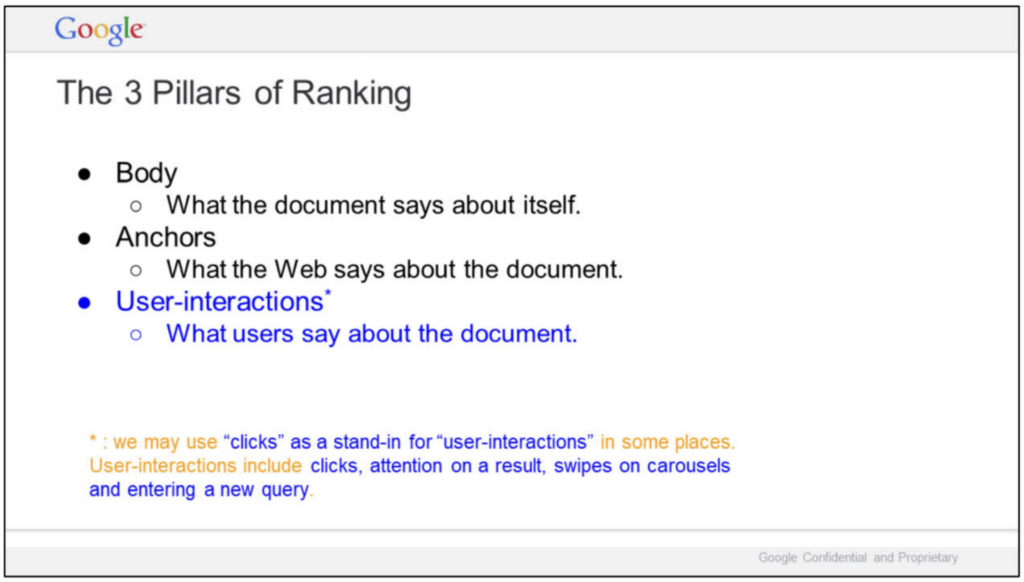
The first two points in the slide below have always been clear: what a page says about itself (on-page SEO) and what others say about it (off-page SEO) have always been obvious ranking factors.
The interesting part is the one highlighted in blue. For years, Google publicly denied using click-based user signals in its rankings.
How users interact with the search results
According to the document, a user’s interactions with the search results include reading, clicking, scrolling and hovering the mouse.
These are interactions all of us make on Google:
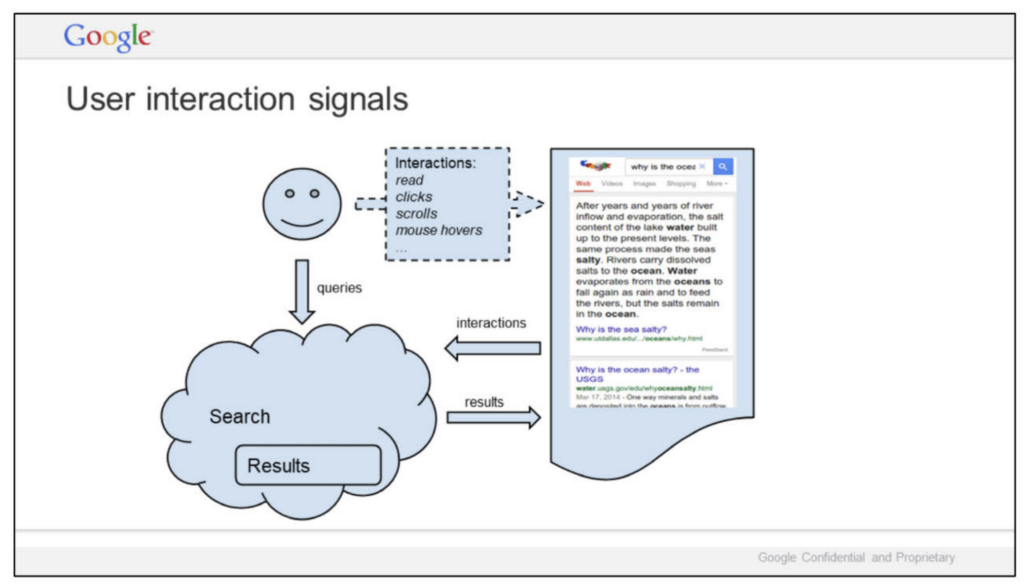
Beyond the ten organic results, Google has other, constantly changing elements it can learn from. They create surfaces where we as users train Google, such as the “People also ask” box and the related searches at the bottom of the page.
How the ongoing dialogue works
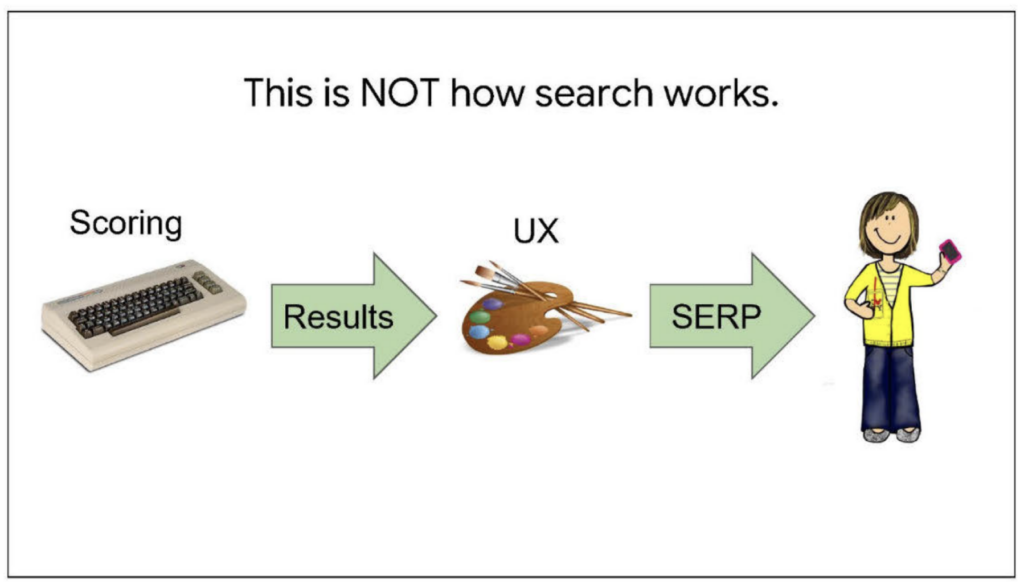
The slide below shows how search does not work, according to Google’s own presentation: Google indexes a page and ranks it, and the result is shown to the user without users having any influence on it. The presentation calls this picture incomplete.
According to the documents, one of Google’s pillars is learning from interactions and adjusting the results accordingly:
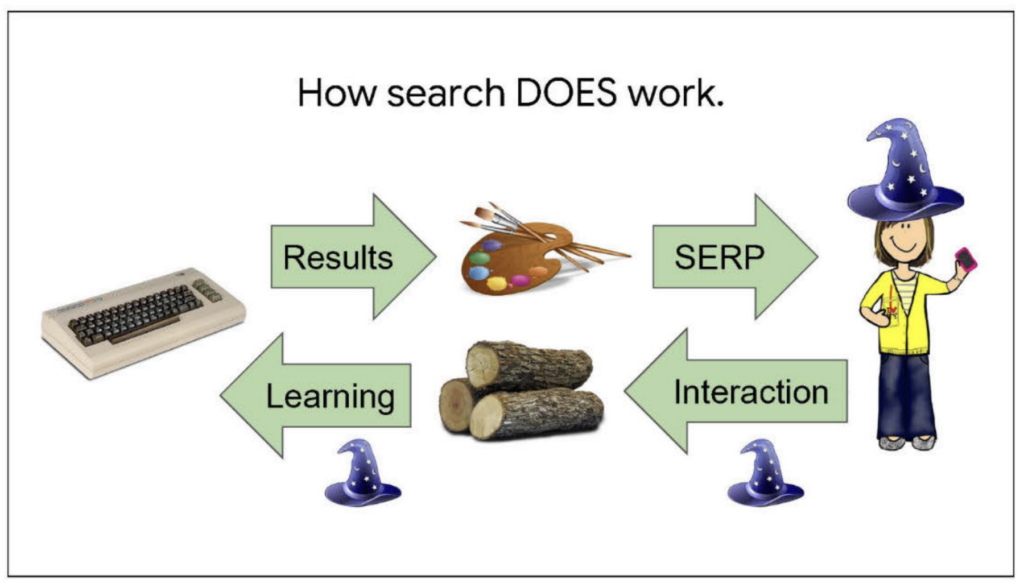
The magic happens when those of us using Google give the next person who searches a better result. This is what creates a near-monopoly that makes it hard for competitors such as Bing to catch up. The court in the antitrust case found that 13 months of Google’s user data is equivalent to more than 17 years of data on Bing.
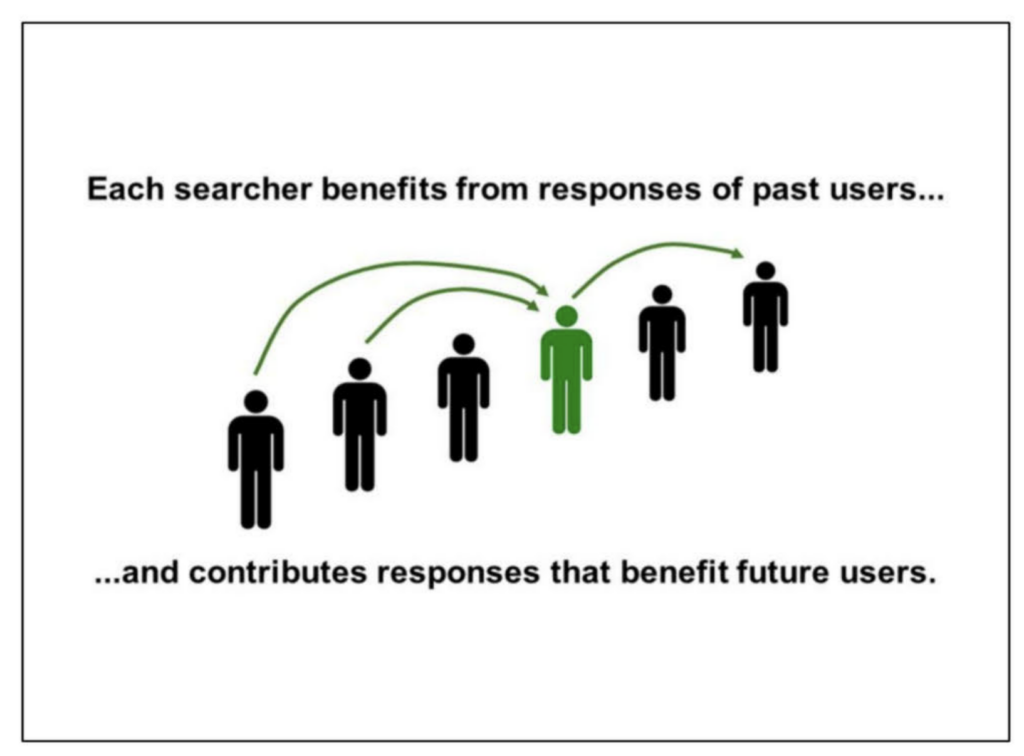
So earlier Google searches help the next person get the best possible results.
How does Google use interactions to rank websites?
Google uses them in two ways:
- Interactions train the ranking system
- Interactions affect the ranking of individual results (one of the three pillars above)
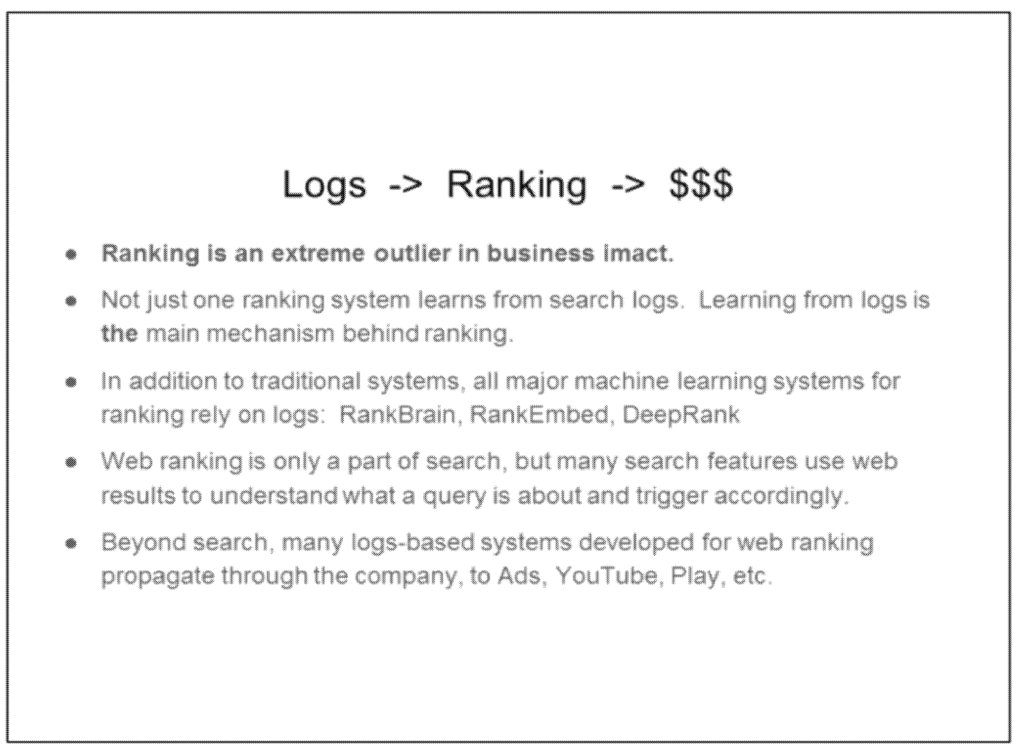
Interactions train the ranking system
Google clearly likes the pages that rank at the top.
When you create a new page, you can analyse your competitors to make an informed judgement about how to build yours.
When you do keyword research, you are sometimes surprised that competitors aren’t targeting keywords you have found. Either you have found something everyone else missed, or you have misunderstood the search intent.
Interactions affect the ranking of individual results
Make sure you answer the question better than your competitors, so that users interact with your page more positively than with theirs.
In other words, don’t create a copy of their page. Work out what you can do to make yours better and more helpful for the user.
If a high share of users click through to your page (you have a high CTR, or click-through rate) and then stop searching after visiting you, those are positive user signals.
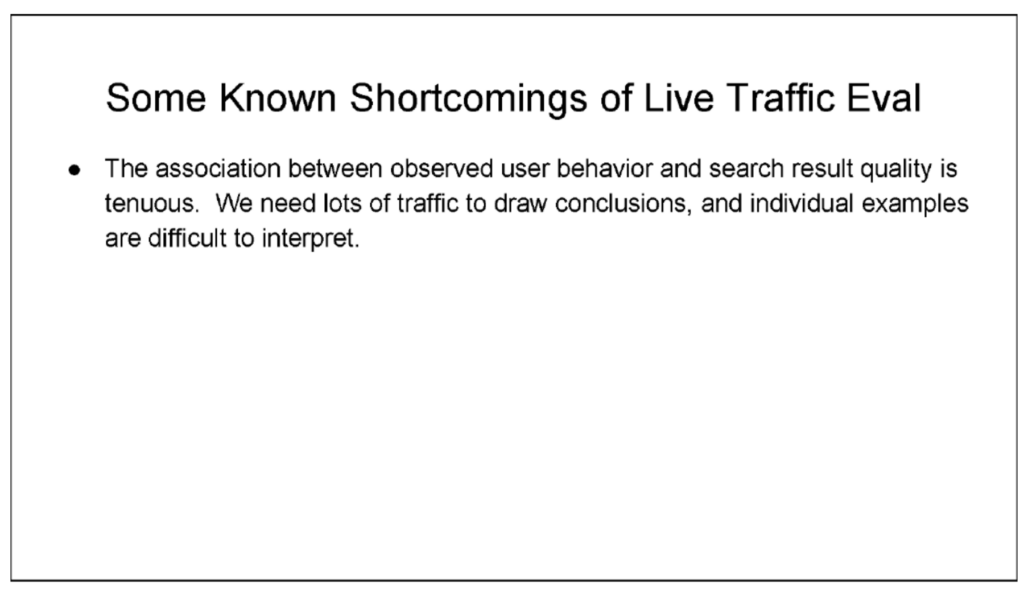
Statistical significance matters
As with any decision based on data, you need significance to decide with confidence.
With low search traffic there are limits, because Google can’t draw conclusions from individual examples. Google very probably has ways of reaching conclusions faster than waiting for significance. I have theories, but I won’t speculate about them in public.
Practical tips
As always, we want to give you practical tips, not just the theory behind them. These are the steps we would take to improve your rankings:
- Be careful about publishing an SEO page or article you are not happy with
- Start by winning a few easier keywords that still have volume, where you can prove your quality
- Give an answer good enough that the user stops searching (where possible)
- Write thoroughly enough that even the most interested readers get their questions answered (but stay on topic)
- If you rank very poorly, try making a bigger update to the page
- Don’t try to rank for every keyword; choose the ones where you belong and have the answer
- Your meta title and meta description should set the right expectations for when users land on your page
- Optimise your meta title and meta description to maximise CTR (click-through rate)
- If you are serious about SEO, don’t under-invest in your website (these parts of the algorithm are unlikely to become less important)
If this article makes a good enough impression that you stop searching, we will gradually improve our own rankings.
Conclusion
However much Google uses this to rank websites, you should optimise for it.
Partly because satisfied users are a natural part of improving your website and growing sales. But also because Google is likely to rank you higher if it sees that people are satisfied when they land on your page.
Exactly how much each factor counts, and which ones matter, will change over time. Care about your users and treat user experience as part of SEO.
Ranking well and selling well go hand in hand. If you want more of both from organic search, book a free search audit.