


How long does SEO take? And how to speed up the results
SEO usually takes 3–12 months before traffic moves, and real commercial impact often 6–24 months. What decides it is what you do with the time.
Is your search pulling its weight?
Get your free search auditSearch is our only field, and we’ve worked in it for 14 years. A senior specialist gets your product feed right first, then runs your Google Shopping, Performance Max and paid search as one account, judged on what each order is worth to you.
Specialist retail, a wide range, and demand spread across many specific product searches. What an account can do depends on your margins, your range and where you start – so we show the work in full, not an average.
The feed and the campaigns handled by one team – whether you run Shopify, WooCommerce, Magento or a custom build.
Get your free search auditThe title is the closest thing Shopping has to a keyword, and the pattern that works is rarely the one your catalogue exports by default. We rebuild titles around brand, product type and the attributes buyers actually type, in the order that matches the search. The same product data decides how your product pages are understood, so this overlaps with ecommerce SEO more than people expect.
Product identifiers, brand, product type, the assigned Google category, condition, availability, price, shipping and returns data. Missing or wrong values don’t throw up an error you’d notice. They quietly shut you out of places you never knew you were missing.
Disapprovals cleared and their underlying cause fixed, price and availability mismatches between the feed and the live page resolved, and monitoring in place so we spot the next batch of disapprovals before your month-end report does.
Labels for margin band, seasonality, stock depth, bestseller status and clearance, so the account can bid differently on a product you make money on and one you don’t. Each product listed once, properly, so its performance data isn’t split across fourteen near-identical entries.
Structured around how the catalogue makes money, not how its menu is laid out. Products grouped so bids reflect margin and demand, search terms reviewed and excluded continuously, and a separate budget for the parts of the range that deserve one.
Powerful, and deliberately hard to see inside. We run it with the controls that do still exist: asset groups split by margin and intent, exclusions that stop it billing you for people who were coming to you by name anyway, and enough reporting structure to show what it’s actually buying. Where the account is small or the data is thin, we’ll say so and run something simpler.
Shopping shows the product; search catches the problem, the comparison and the specific model, and it’s where you control the wording. Both run in one account under one set of negative keywords, so they don’t bid against each other for the same search. Remarketing is capped and segmented by how close someone got, and where you have first-party customer data, we set it up so the account can tell a new customer from a returning one.
Conversions built natively in the ad platform, carrying the real value of each basket, so the bidding learns the difference between a small order and a large one. Reporting is monthly, in plain English, and leads with orders, order value and cost per acquisition.
It starts with a free search audit. We look at your search before we talk, and our founder takes you through what we find in 30 minutes. Nothing to prepare, no obligation.
You'll come away with:

“Quick, easy to work with, and they often sort things out before I’ve even had time to worry.”Suad Dimiraca, HyrBox
Speak to our founder
No sales team. Your first conversation is with our founder, who has spent 14 years in search. Email or book 30 minutes.

Nils Fridlund
There are no keywords in Shopping. What you show up for is decided by your product data, which means the feed is doing the job a keyword list does everywhere else in paid search. So when a campaign underperforms, the first place to look is rarely the bid.

Critical. When a title carries your internal product names and leaves out the words buyers type, the product never gets matched to the searches it should be winning – and no amount of bidding will fix that.

High. Without custom labels for margin, seasonality and stock depth, the account treats a thin-margin product exactly like your most profitable one. It'll happily buy more of the wrong orders, and the headline number can look fine while contribution doesn't.

Critical. A missing identifier, a wrong category assignment or a price that doesn't match the live page can exclude a product from an entire surface. It doesn't arrive as an error you'd notice; it arrives as silence, usually long before anyone goes looking.
A large catalogue has too many products to review by hand. AI lets us check titles and attributes across thousands of products, find the duplicates and flag the ones quietly excluded from a surface, in a fraction of the time. That’s the groundwork. Our specialists decide which products get priority, how the account is structured and what we bid on.
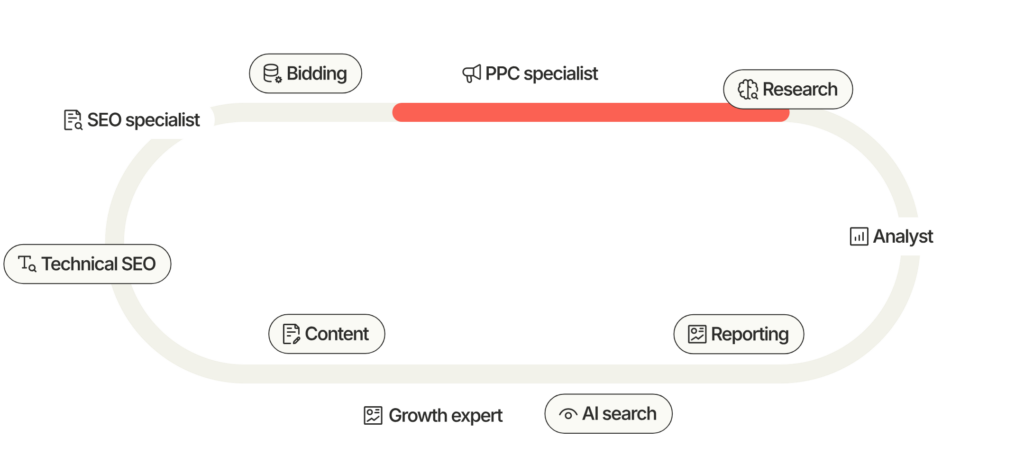
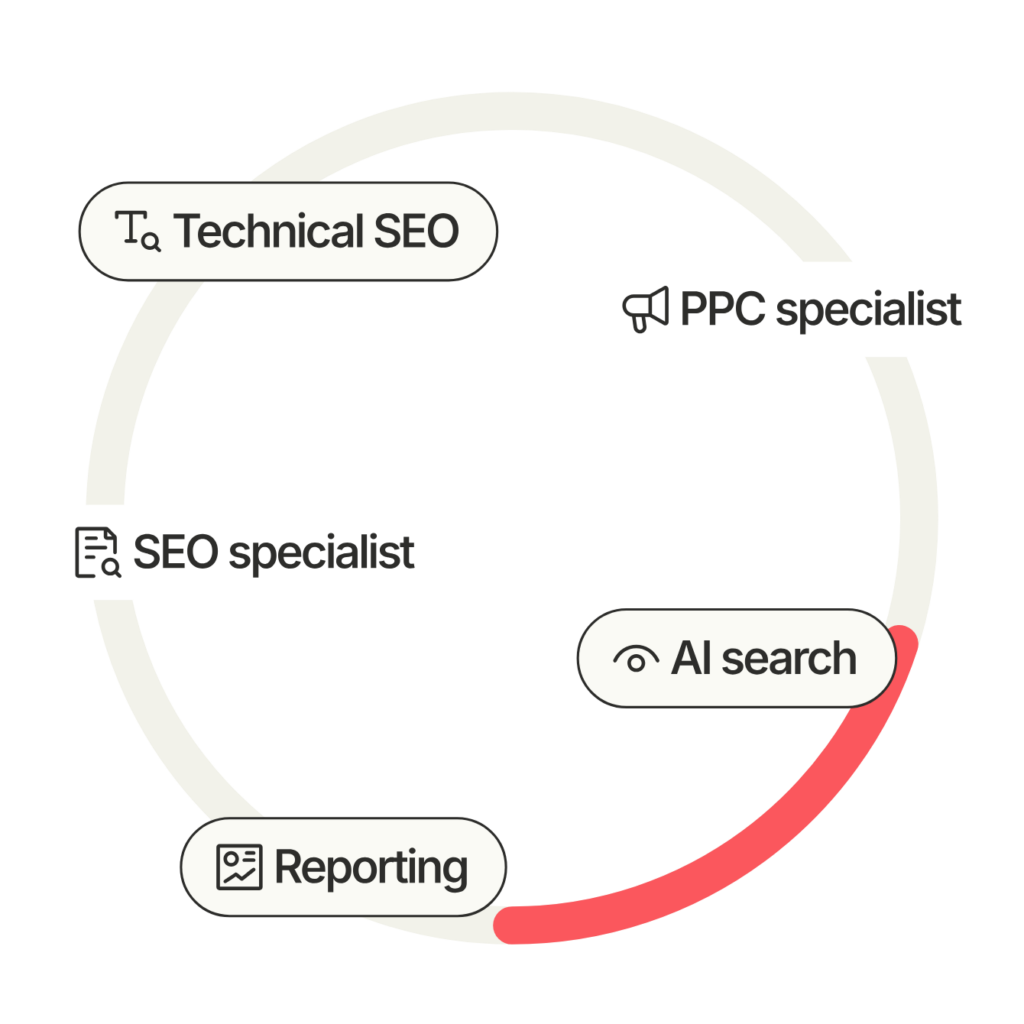
A named senior paid search specialist runs your account and is your contact – the same person over time, with no account managers in between. Developers, analysts and SEO specialists step in when a job calls for it.



SEO usually takes 3–12 months before traffic moves, and real commercial impact often 6–24 months. What decides it is what you do with the time.

Google cites pages in AI Overviews, and what gets cited is not always what ranks. Here is how to be the source it quotes.

Technical SEO makes sure Google can crawl, index and understand your website. What to fix first, and a checklist to work through on your own site.