


Off-page SEO: how to build authority with links
The best links come naturally, but without a strategy to speed things up, you risk handing competitors a lead that is hard to close.

Off-page SEO is everything you do away from your own website to increase its authority and credibility in Google’s eyes, mainly through external links, mentions and having your brand visible in the right places. The aim is to get other trusted websites to point to you and talk about you, so that Google can be confident you are an established business.
The best links come naturally, but without a strategy to speed things up, you risk handing competitors a lead that is hard to close.
What is off-page SEO?
Off-page SEO covers everything that happens outside your own website. That includes building external links, social media and external mentions of your business details (NAP).
The aim of off-page SEO is to increase your website’s authority by getting other trusted sources to link to and mention your site.
It is also hard to do well, which is exactly why it matters. Earning a steady flow of relevant links sets you apart, and it shows in the search results.
When does off-page SEO matter most?
Off-page SEO matters most if you:
- Have a new website and are probably in Google’s sandbox.
- Have far fewer links than your competitors and have already tried other SEO work.
- Have very important pages and keywords that you need to target precisely.
How Google assesses your authority
Google measures authority in more ways than simply counting links. When internal documentation for Google’s Content Warehouse API leaked in 2024, it confirmed something SEO specialists had long suspected. According to Mike King’s analysis at iPullRank, the documentation covers 2,596 modules with 14,014 attributes, including a site-level authority attribute (siteAuthority) and a quality classification of each link’s source page (sourceType).
What does that mean in practice? Two things are particularly worth understanding:
- siteAuthority: The documentation describes a site-level authority signal that is applied in ranking, although it doesn’t say how it is calculated. It would help explain why an established website can publish a new article and rank almost straight away, while a new website faces an uphill struggle for the same keyword.
- Site clusters (tundraClusterId): The documentation also stores clustering information at site level, without explaining how the clusters are formed. A common reading is that Google groups websites by topic, which fits a long-standing principle: links from websites in the same field as yours strengthen your topical focus far more than links from unrelated networks.
The second point ties in closely with topical authority: the more you appear in contexts related to your niche, the clearer your topical focus becomes to Google. For you, that means a simple priority. Go after links from websites in your own industry, not just websites with a high authority score. A link in the right context does more for your rankings, and so for your sales.
Practical tips for getting the most from a link
A good external link is not the one from the biggest website, but the one from the right website in the right context. Several factors decide how much a link is worth:
- Page strength: Websites with high authority and credibility pass on more value.
- Closeness to the root: Links close to the root of a website are usually more powerful.
- Relevance: Links from pages that are relevant to your content are more valuable.
- Contextually relevant placement: Links within relevant paragraphs and high up on the page are more valuable.
- Anchor text: Variation in anchor text matters. In a natural link profile, most anchor text is your brand name or your URL. Keep exact-match keyword anchors to a minimum: Google’s spam policies name links with optimised anchor text in articles, guest posts or press releases as an example of link spam.
- Unique IP addresses: The number of unique IP addresses linking to your website shows a wider spread of links and adds credibility.
- Fast indexing: If Google indexes a website’s new pages quickly, that is usually a sign of quality. Google prioritises sites it likes.
- Concentrated link equity: A link from a page with few outbound links passes more link equity to your page.
- Dofollow vs nofollow links: Both matter, but dofollow links have a greater impact on your SEO.
One thing carries more weight than most people realise: the linking page’s own relevance and traffic. A link from a smaller niche website with real organic traffic in your industry often beats a link from a large media portal where the article has no topical connection to you. Top-ranking results generally have more backlinks than those in positions 2–10 (Backlinko’s analysis of 11.8 million Google results found that the number one result had 3.8 times as many on average), but it is quality and relevance that make the difference, not the number.
Tools such as Ahrefs or Semrush help you check a website’s backlinks before you invest time in it. Ahrefs even has a free tool for looking at a link profile.
Much of what holds for external links is also relevant for internal links.
Ways to earn links
The best links happen naturally. Established companies generally get links from important websites. But sometimes a little extra push is needed. My tip is to start with websites that could link to you but don’t yet. There you can give a gentle nudge, or start a conversation where you genuinely want to contribute something of value.
Here are some common link building methods:
- Create first-class content: for example statistics and graphics that are hard to recreate. Good text alone is something people can often reproduce themselves. When something is hard to recreate, more people tend to link to it.
- Build unique tools: If you build unique tools (ideally free) that people find useful, you will earn links. If you can build something for your industry, such as a calculator or live statistics from an API, you can earn external links to that page.
- Data-led digital PR: Produce unique statistics, a report or a survey that journalists genuinely need to reference, and offer it to the relevant trade and local press. Digital PR works well precisely because the links are earned and editorial rather than bought.
- Relationships: Use your relationships with partners, suppliers and customers to generate links. Perhaps you can provide a testimonial on someone’s website that links back to you.
- Guest posts: Write guest posts or articles for other relevant websites, with a link back. Expect it to be harder than it was: with so much mass-produced AI content around, editors are wary, and a generic pitch goes straight in the bin.
- Find unlinked mentions: Search for your company name to find pages that mention you without linking. Contact the writer, thank them for the mention and offer a link to the underlying report or page that makes things easier for the reader. Focusing on value to the reader, rather than demanding a link to your homepage, tends to land far better.
- Social media: Be active on social media to generate links and mentions. These aren’t direct links, but being visible and getting traffic from social media is positive.
- Forums: Take part in discussions on relevant forums and create natural links. Be careful, though, as nobody likes spam. Where it fits and is genuinely helpful, it can work, more in some niches than others.
- Buying links: As a last resort you can buy placements, but be careful. Google’s spam policies treat buying or selling links for ranking purposes as link spam, and paid links are only acceptable when marked
rel="sponsored"orrel="nofollow". Hidden, paid dofollow links therefore risk a manual action, and Google’s site reputation abuse policy also targets third-party content placed on established websites mainly to borrow their ranking strength. When Google neutralises such links, the value they passed can disappear overnight.
And a little realistic expectation-setting while we are at it: when you contact websites yourself, the usual answer is silence. Response rates for manual email outreach are low, so personal, relevant requests are everything.
Always create real value
Creating real value with your content means that visitors actually click on your links and engage with what you have written. Google says it uses aggregated and anonymised interaction data to assess whether search results are relevant. If the page you get the link from ranks higher and gets more traffic thanks to your valuable content, the link to your website becomes more important too.
NAP SEO
NAP SEO (name, address, phone) is about making sure your company name, address and phone number are correct and consistent. Consistent details help Google confirm that your business information is accurate, which matters above all for local SEO. A few tips for NAP:
- Keep your listings consistent everywhere.
- Add your NAP to niche and local websites that are relevant to your business.
- Find out where your competitors are listed by searching for their names, and list yourself there too.
- Search for old addresses and phone numbers and update the pages that are out of date.
Read more about local SEO.
Analyse your competitors’ links
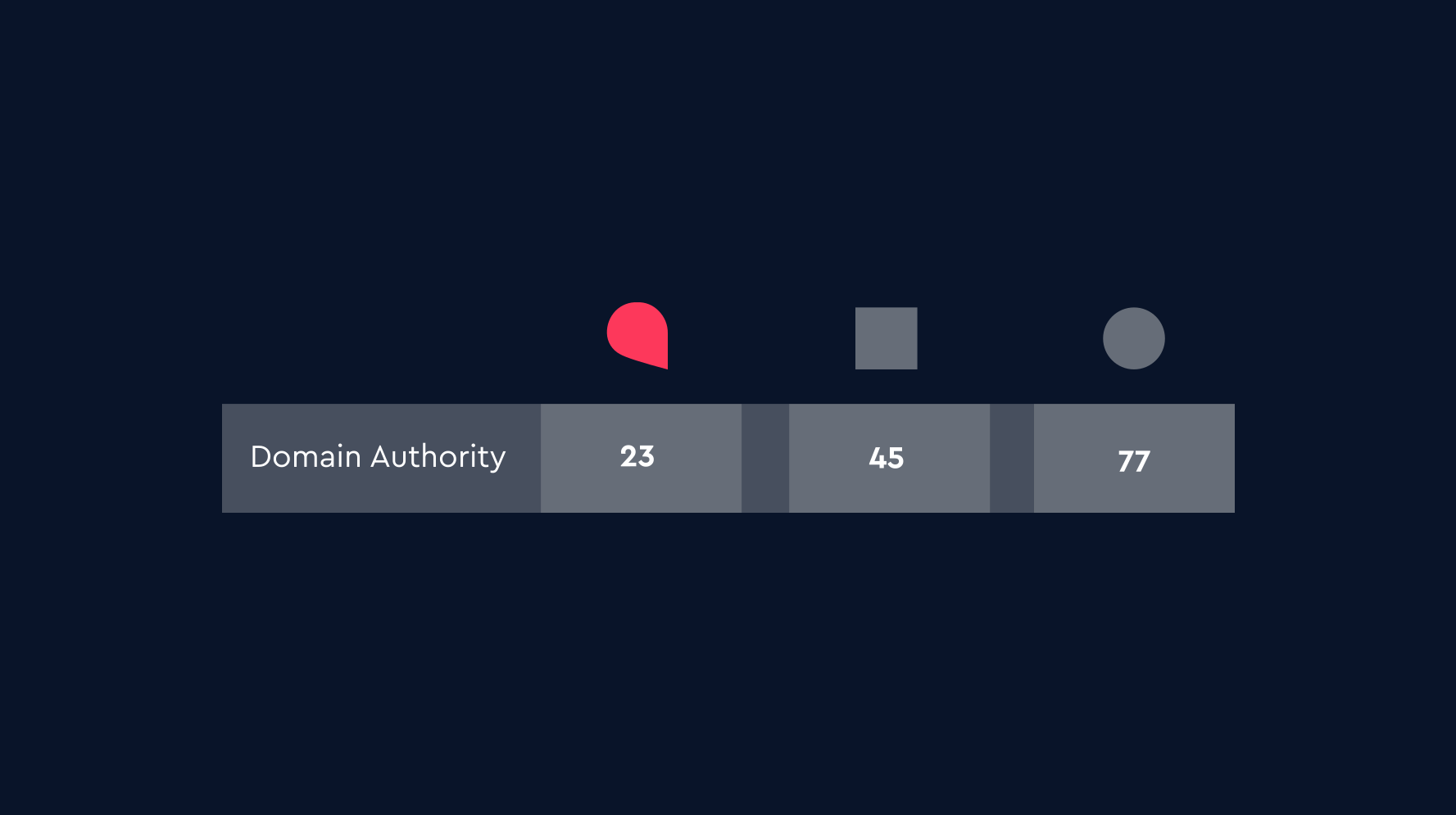
Analysing your competitors’ links means mapping which external websites point to them, so that you find the same industry websites where your own site ought to appear. There are often a handful of important industry websites where most competitors are listed. Appearing there shows that your website is relevant in the same niche and field. It builds a relevant cluster, and Google understands better what you do.
With SEO tools such as Ahrefs or Moz you can identify where your competitors get their external links. You can also google their names and see where they turn up.
Your link profile has to look natural
Google now rarely penalises an entire domain for bad inbound links. Instead, its systems neutralise the value of the spammy links. With its December 2022 link spam update, Google said that “any credit passed by these unnatural links” is lost. That is important to understand, because it changes how you should act.
In the past, people cleaned up suspect links by hand and uploaded disavow files every month. Today that is usually unnecessary and often harmful. Google’s own guidance says most sites will not need the disavow tool, and that you should only use it if you have a considerable number of spammy, artificial or low-quality links and they have caused, or are likely to cause, a manual action. In practice, that means a manual action in Search Console, or a previous agency having built manipulative networks at scale. Uploading files based on a tool’s “toxic link” score risks disavowing links that give you authority, and losing rankings for no reason.
Whether the links to your website appeared on their own or you were behind them, it is important that they look natural. Examples of unnatural patterns:
- Overuse of exact-match anchor text.
- Links that Google judges to have been paid for.
- Lots of links from irrelevant websites.
- Links from websites with low authority or a poor reputation.
Off-page SEO and AI search
Off-page SEO is no longer only about clickable links. Mentions of your brand, even with no link at all, increasingly look like a signal in their own right.
Search engines and AI answers read the web as a connected map of which businesses belong with which topics. When your company name appears in the right context on respected websites, Google can associate you with the topic, whether the mention is a clickable link or plain text. This is known as co-occurrence.
The data points the same way. In an Ahrefs study of 75,000 brands, brand web mentions correlated with visibility in Google’s AI Overviews at 0.664, against 0.218 for backlinks. (A correlation does not mean that mentions alone cause the visibility, but the signal is hard to ignore.)
For us, external links still matter, but they come second to having a user-friendly website and a strong brand that people search for and like. With AI-generated content, where writing text is no longer difficult, links have if anything become more important again: it is far harder to get a good website to link to you, or to be mentioned in the right context, than to churn out a few blog posts with AI.
Frequently asked questions about off-page SEO
What is the difference between on-page, off-page and technical SEO?
On-page SEO is about optimising the content and HTML on your website, off-page SEO focuses on external factors such as links, and technical SEO deals with the website’s infrastructure.
Is it a good idea to buy links?
Bought links can be effective, but they are risky if they don’t look natural. Google treats buying links for ranking purposes as link spam and can penalise websites that use unnatural links. Paid placements must be marked rel="sponsored" (or rel="nofollow") to comply with Google’s policies.
What is the difference between dofollow and nofollow links?
Dofollow links pass link equity and affect SEO. Nofollow links generally don’t pass link equity, but they can still bring traffic and visibility.
How do I measure the results of off-page SEO?
You measure the results mainly through the number of unique referring domains, better rankings for your important keywords and more organic traffic. Look at the growth in new, relevant domains over time rather than the total number of links: the variety of sources carries more weight than the volume.
Does social media affect my rankings?
Shares on social media don’t pass link equity directly, but they spread your content so that other websites can discover it and link to you. Visibility and traffic from social channels are therefore positive, if indirect.
If you need help with SEO
If you need help with your SEO, read more about how we work as an SEO agency, or start with a free search audit.